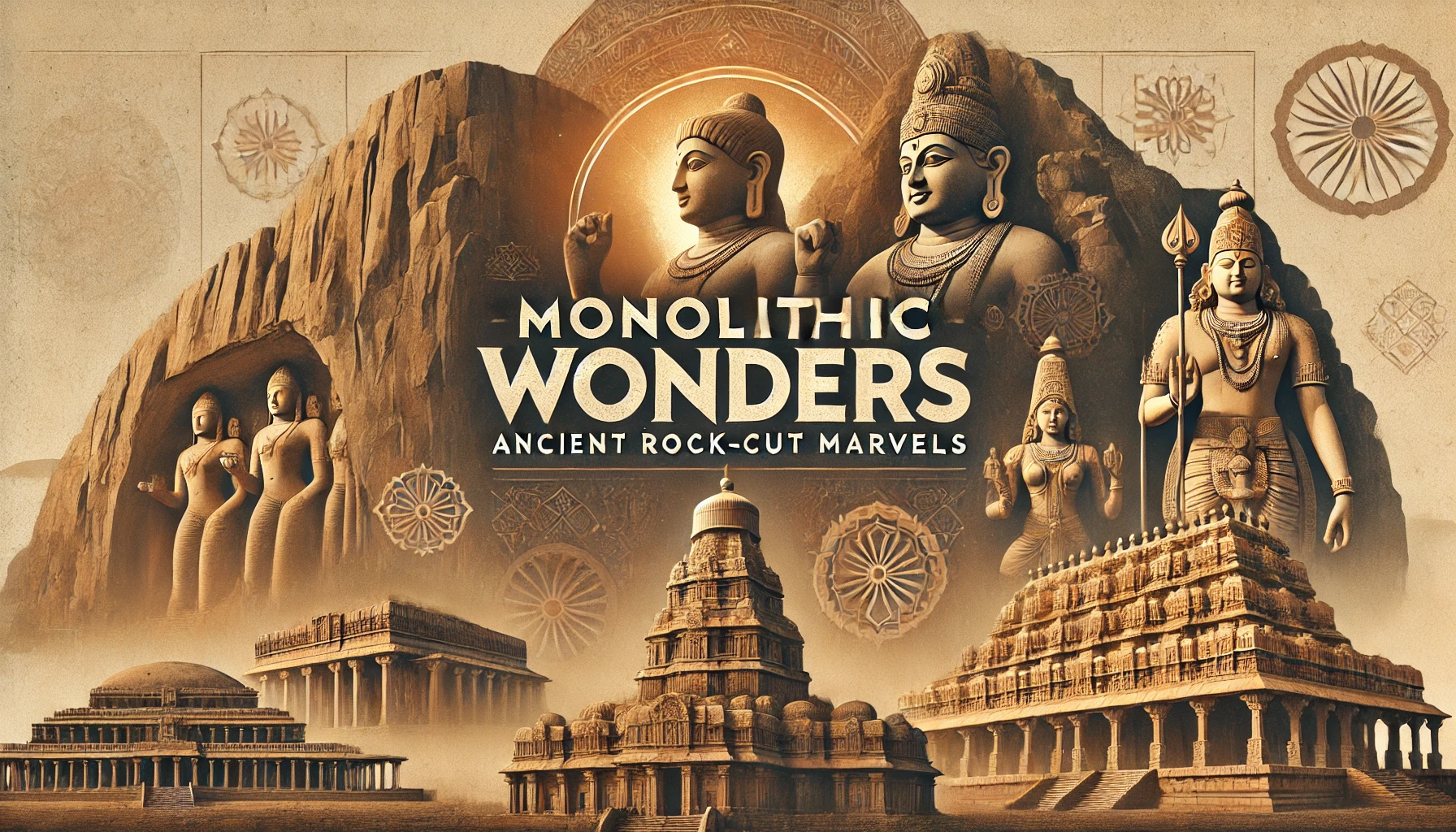
Discovering the Monolithic Wonders of India: India is home to some of the world’s most stunning monolithic wonders, showcasing exceptional artistry and engineering. These structures, carved from single rock formations, reflect ancient India’s devotion, creativity, and architectural expertise.
From colossal statues to intricately sculpted caves, each monolithic site tells a fascinating story. This article explores the most spectacular monolithic wonders of India, highlighting their significance and breathtaking craftsmanship.
Kailasa Temple, Ellora: India’s Largest Monolithic Wonder
The Kailasa Temple at Ellora Caves, Maharashtra, is one of the most incredible monolithic wonders of India. Constructed in the 8th century under the Rashtrakuta dynasty, this rock-cut temple was carved from a single basalt rock using an advanced excavation technique.
Why is Kailasa Temple a Marvel?
- Carved from a single rock, showcasing precise craftsmanship.
- Intricate sculptures depicting Hindu mythology.
- A massive central courtyard surrounded by shrines and pillars.
This engineering feat continues to amaze historians and architects, often compared to global wonders like Petra and Abu Simbel.
Pancha Rathas, Mahabalipuram: Five Monolithic Chariots
Located in Mahabalipuram, Tamil Nadu, the Pancha Rathas (Five Chariots) represent an architectural breakthrough by the Pallava dynasty in the 7th century. Each ratha, sculpted from a single rock, exhibits distinct Dravidian architectural styles.
Key Features of Pancha Rathas
- Dedicated to Hindu deities, including Durga, Shiva, and Vishnu.
- Lifelike sculptures of animals, including an elephant and Nandi bull.
- An important milestone in South Indian temple architecture.
Recognized as a UNESCO World Heritage Site, these monolithic structures remain a testament to India’s artistic excellence.
Gomateshwara Statue, Shravanabelagola: A Majestic Monolithic Wonder
Standing 57 feet tall, the Gomateshwara statue, also known as Bahubali, is among the largest monolithic statues in the world. Commissioned in 981 AD by the Ganga dynasty, this sculpture represents Jain ideals of renunciation and self-discipline.
Why is the Gomateshwara Statue Unique?
- Carved from a single granite block, symbolizing Jain principles.
- Mahamastakabhisheka festival, held every 12 years, where devotees bathe the statue in saffron and milk.
- Located atop Vindhyagiri Hill, offering breathtaking views.
A visit to Shravanabelagola provides a spiritual and artistic experience, attracting thousands of pilgrims and tourists.
Lepakshi Nandi: India’s Largest Monolithic Bull
The Lepakshi Nandi, situated in Andhra Pradesh, is one of the largest monolithic Nandi statues in India. Measuring 27 feet long and 15 feet high, this majestic structure faces the famous Veerabhadra Temple.
Highlights of Lepakshi Nandi
- Exquisite detailing, from its carved ornaments to facial expressions.
- Perfect alignment with the temple’s floating pillar.
- A symbol of devotion, representing Nandi’s unwavering faith in Lord Shiva.
This magnificent structure continues to be a major attraction for history and architecture enthusiasts
Elephanta Caves: Mumbai’s Rock-Cut Wonder
Situated on Elephanta Island, near Mumbai, the Elephanta Caves date back to the 5th–7th century AD. These rock-cut caves, dedicated to Lord Shiva, feature some of India’s most intricate monolithic sculptures.
Significant Features of Elephanta Caves
- The colossal Trimurti sculpture, portraying Shiva as Creator, Preserver, and Destroyer.
- Beautifully carved rock-hewn shrines, displaying Shaivite traditions.
- A UNESCO World Heritage Site, preserving India’s monolithic heritage.
These caves serve as an artistic and spiritual center, attracting historians and devotees alike.
Other Must-Visit Monolithic Wonders in India
1. Udayagiri and Khandagiri Caves, Odisha
Dating back to the 1st century BC, these Jain rock-cut caves boast remarkable inscriptions and carvings.
2. Badami Cave Temples, Karnataka
Built in the 6th century, these temples feature magnificent sculptures dedicated to Shiva, Vishnu, and Jain Tirthankaras.
3. Varaha Cave, Mahabalipuram
This monolithic Hindu temple showcases Lord Vishnu’s Varaha avatar, rescuing the Earth goddess.
4. Basadi Halli Jain Temples, Karnataka
These monolithic Jain temples reflect Karnataka’s rich architectural and spiritual traditions.
Preserving India’s Monolithic Heritage
India’s monolithic wonders are not just architectural masterpieces but also cultural treasures. However, environmental factors and human activities pose threats to these structures. To preserve these ancient marvels, government authorities and heritage organizations continue to work on restoration projects.
Supporting conservation efforts and practicing responsible tourism will help safeguard these sites for future generations.
FAQs About Monolithic Wonders of India
The Kailasa Temple at Ellora is India’s largest monolithic rock-cut temple.
The Gomateshwara statue in Shravanabelagola, standing 57 feet tall, is the tallest.
Why are monolithic structures significant?
They highlight ancient engineering, artistic excellence, and religious devotion, making them invaluable heritage sites.
The Kailasa Temple in Ellora and the Elephanta Caves are UNESCO-listed heritage sites.