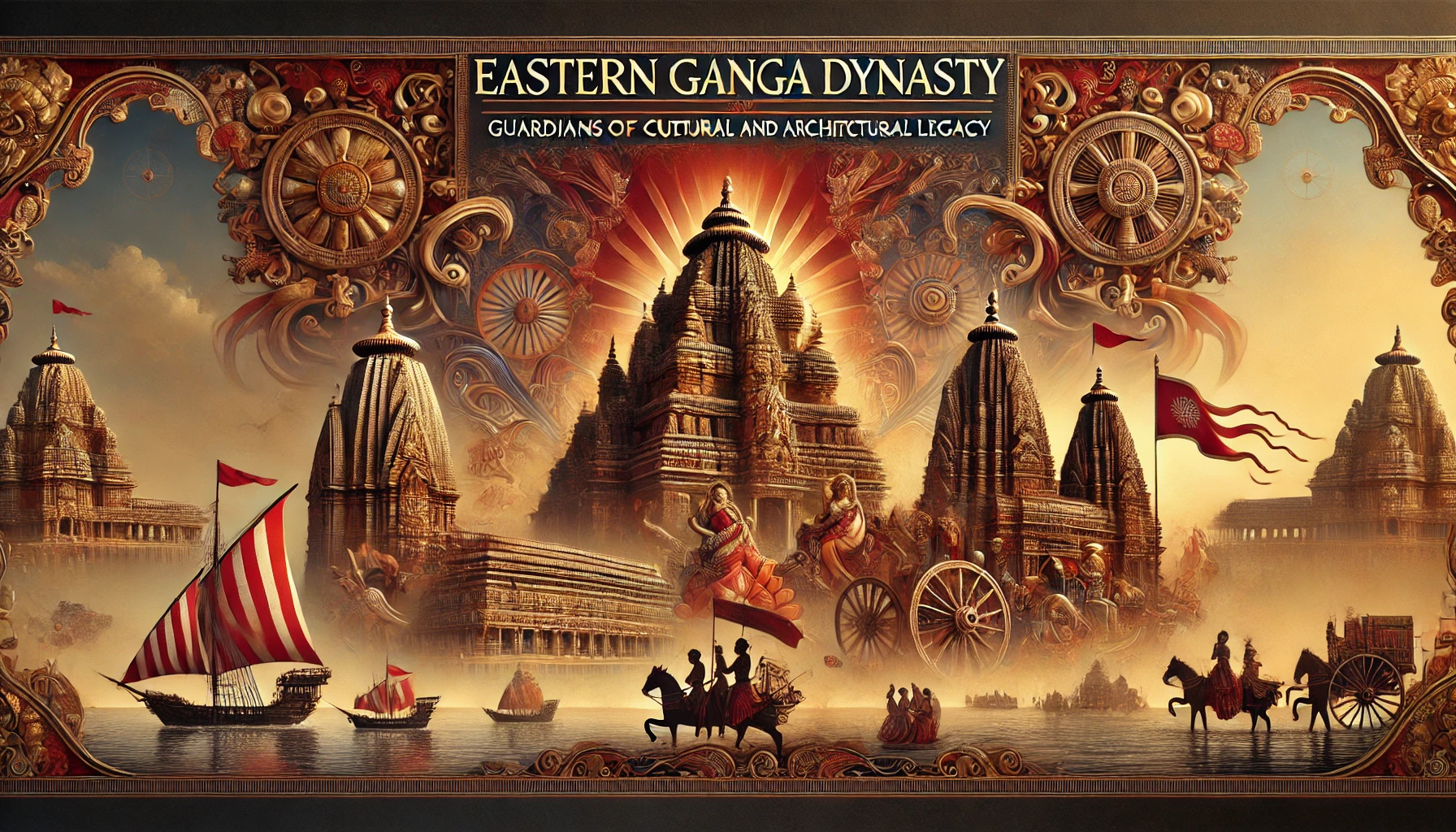
The Eastern Ganga Dynasty, which ruled over the region of Kalinga (modern-day Odisha and parts of Andhra Pradesh) between the 11th and 15th centuries CE, played a pivotal role in shaping India’s cultural, religious, and architectural heritage. The dynasty, renowned for its devotion to Lord Jagannath and remarkable architectural achievements, left an indelible mark on history.
Under their reign, the Eastern Ganga rulers fostered the growth of art, literature, and architecture, while also asserting their military prowess. Let us delve into the history, major achievements, and cultural legacy of this illustrious dynasty.
The Origins and History of the Eastern Ganga Dynasty
The Eastern Ganga Dynasty traces its origins to the ancient Gangas of southern India, who were believed to have migrated to Kalinga. However, the dynasty established its firm hold in the 11th century CE, when King Anantavarman Chodaganga Deva ascended the throne.
Anantavarman Chodaganga Deva, regarded as the dynasty’s most celebrated ruler, unified the fragmented regions of Kalinga and expanded the kingdom’s influence. He was the son of Rajaraja Deva I, who hailed from the Chola lineage, which explains the dynasty’s connection to the Tamil-speaking regions of southern India.
By the time of his reign, the Eastern Gangas had established their capital at Kalinganagara (modern-day Mukhalingam in Andhra Pradesh). Their rule eventually encompassed large portions of Odisha, Andhra Pradesh, and parts of West Bengal.
Major Rulers of the Eastern Ganga Dynasty
The Eastern Ganga Dynasty was marked by a succession of rulers who contributed significantly to the region’s political and cultural landscape.
1. Anantavarman Chodaganga Deva (1078–1147 CE)
- Consolidated the kingdom of Kalinga and expanded its boundaries.
- Initiated the construction of the Jagannath Temple in Puri, which remains a significant center of worship to this day.
2. Narasimhadeva I (1238–1264 CE)
- Renowned for commissioning the construction of the Konark Sun Temple, a UNESCO World Heritage Site and one of India’s greatest architectural achievements.
- Successfully defended the kingdom from invasions by the Delhi Sultanate and other northern forces.
3. Bhanudeva I and Successors
- The later rulers of the dynasty continued the tradition of temple-building and supported religious and cultural growth.
- However, by the 15th century, the dynasty’s power declined due to repeated invasions by neighboring kingdoms and internal conflicts.
Military Achievements of the Eastern Ganga Dynasty
The Eastern Gangas were not just patrons of art and culture but also formidable military rulers. They maintained strong defenses to protect their kingdom from northern invasions.
- Victory Against the Delhi Sultanate: Narasimhadeva I is remembered for defeating the forces of the Sultanate of Delhi during his reign. His military campaigns ensured the safety and sovereignty of Kalinga.
- Naval Strength: The dynasty maintained a strong naval fleet, which enabled them to protect their coastal territory and participate in maritime trade.
Their military strength played a key role in preserving the cultural identity of Kalinga, even during periods of external aggression.
Architectural Contributions of the Eastern Ganga Dynasty
The Eastern Ganga Dynasty is best known for its monumental architectural achievements, which showcase their artistic and engineering expertise.
1. Jagannath Temple, Puri
- Initiated by Anantavarman Chodaganga Deva, the Jagannath Temple in Puri is one of the four sacred dhams (pilgrimage sites) in Hinduism.
- The temple is dedicated to Lord Jagannath, a form of Lord Vishnu, and continues to be a major center for devotion and spirituality.
2. Konark Sun Temple
- Built during the reign of Narasimhadeva I, the Konark Sun Temple is a masterpiece of Kalinga architecture.
- Designed as a colossal chariot of the Sun God, it features intricately carved wheels, horses, and sculptures that reflect the dynasty’s architectural brilliance.
3. Other Temples and Structures
- Numerous smaller temples and monuments across Odisha, including the Mukhalingam Temple, were constructed under the Eastern Gangas.
- These temples exemplify their commitment to blending spirituality with art.
Cultural Legacy of the Eastern Ganga Dynasty
The Eastern Gangas contributed immensely to the cultural and religious identity of Odisha.
1. Patronage of Religion and Literature
- The Eastern Gangas were devout followers of Vaishnavism, and their rule cemented Odisha’s reputation as a center for Jagannath worship.
- They also supported the growth of Sanskrit and Odia literature. Poets, scholars, and religious leaders flourished under their patronage.
2. Promotion of Classical Dance
- The temples of the Eastern Gangas, particularly the Jagannath Temple and Sun Temple, became venues for classical Odissi dance performances.
- This tradition continues to this day, preserving India’s cultural heritage.
3. Maritime Trade
- The dynasty facilitated maritime trade with Southeast Asia, enhancing cultural and commercial exchanges with countries like Java, Sumatra, and Bali.
Challenges and Decline of the Eastern Ganga Dynasty
Despite their numerous achievements, the Eastern Gangas faced challenges that eventually led to their decline.
- Invasions: Repeated attacks by the Delhi Sultanate weakened their kingdom.
- Internal Conflicts: Succession disputes and internal conflicts fragmented their power base.
- Emergence of the Suryavanshi Dynasty: By the 15th century, the Eastern Ganga Dynasty was replaced by the Suryavanshi rulers, marking the end of their rule.
Interesting Facts About the Eastern Ganga Dynast
- Chola Connection: The dynasty had Tamil roots, as Anantavarman Chodaganga Deva’s mother belonged to the Chola dynasty.
- Jagannath Rath Yatra: The famous Rath Yatra (chariot festival) of Puri was initiated during their reign and continues to attract millions of devotees every year.
- Architectural Syncretism: Their temples blended elements of Dravidian and Kalinga architectural styles, creating unique and innovative designs.
FAQs
The Eastern Gangas were a dynasty that ruled the Kalinga region (modern-day Odisha and parts of Andhra Pradesh) from the 11th to the 15th century CE.
The dynasty is known for building the Jagannath Temple in Puri and the Konark Sun Temple, as well as promoting art, literature, and maritime trade.
Anantavarman Chodaganga Deva and Narasimhadeva I are considered the most notable rulers of the dynasty.
Repeated invasions, internal conflicts, and the rise of the Suryavanshi Dynasty contributed to their decline.
The dynasty primarily followed Vaishnavism and actively promoted the worship of Lord Jagannath.
Conclusion
The Eastern Ganga Dynasty stands as a symbol of India’s rich cultural, architectural, and spiritual heritage. Their remarkable achievements in temple architecture, their devotion to religion, and their role in fostering literature and art have left an enduring legacy.
Even centuries after their decline, the monuments they built, such as the Jagannath Temple and the Sun Temple, continue to inspire awe and reverence. For anyone exploring India’s history, the Eastern Ganga Dynasty remains a fascinating chapter that showcases the grandeur of ancient Indian civilization.